
Skip to content

Case studyAgriculture & AI

From science programs to products worth building.

In the CGIAR AI Hub's product team, I help turn science program ideas into product stories that partners can build, and strengthen the Human Centric Design practice behind them, across research centres.

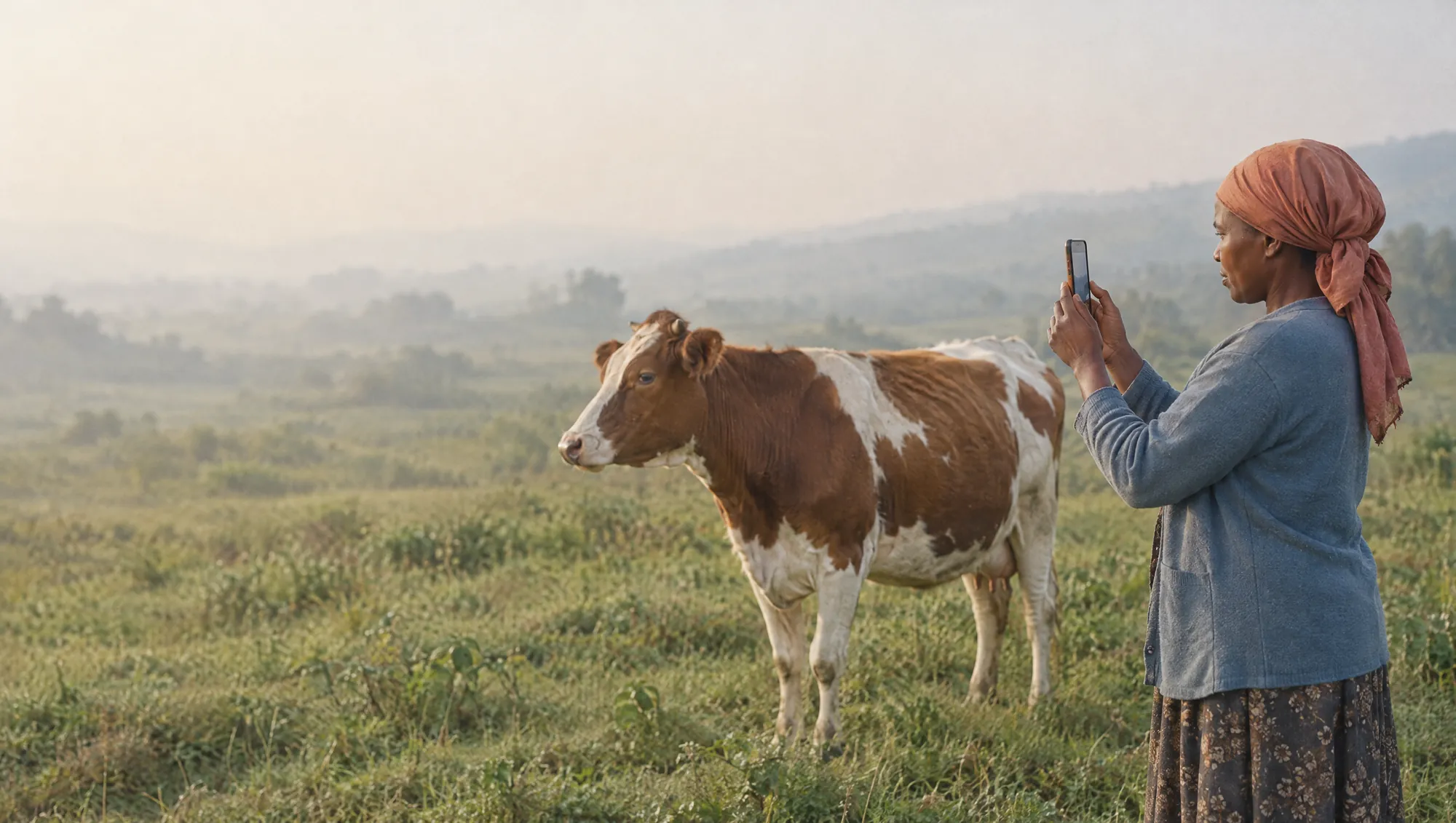
Illustration: a smallholder farmer in a misty green field photographs her cow with her phone.
My role
Service design consultant in the AI Hub's product team
Where
CGIAR AI Hub, Digital Transformation Accelerator
My part
  • Research
  • Stakeholder mapping
  • Workshops
  • Product stories
  • Concept mock-ups
The context

Helping science reach people faster.

CGIAR is one global research partnership. Its accelerators feed its science programs, and the science programs take proven ideas to impact. The AI Hub asks how AI can help that science reach people faster.

The hub is funded by the UAE through its International Affairs Office (IAO), and it builds on the UAE's AI and agricultural innovation ecosystem: MBZUAI for advanced AI research, Inception for prototyping and development, and AIM for Scale for taking solutions to the people who use them.

My part in the team

I'm part of the AI Hub's product team as a service designer, and our role sits in scoping. Together we run the research and stakeholder mapping that scoping needs, facilitate the workshops where ideas get shaped, write the product story at the heart of each pitch, and prepare the handover. Prototyping and development are carried out by Inception or other implementation partners.

Where the AI Hub sits within CGIAR.
The pipeline

Many ideas in, one working product out.

Science programs spot real needs on the ground; the hub scopes them, shortlists the strongest, shapes them into one product pitch, and hands them to partners to build. It has already produced live products.

An idea, grown

  1. Spot the opportunity

    Science programs identify real needs on the ground, where AI could genuinely help.

  2. Scope it

    The hub checks feasibility and data readiness before anything moves forward.

  3. Shortlist

    A competitive process picks the strongest opportunities, not the loudest ask.

  4. Produce the pitch

    The hub and the science programs shape each opportunity into one cohesive, product-based pitch.

  5. Handover

    Once the International Affairs Office signs it off, the idea is handed to Inception or other implementation partners, who prototype, build, test and scale it.

A working product. This process has already produced live products.

Many opportunities in, one working product out.
Chapter one · LivestockAI

From scattered tools to one product story.

LivestockAI is one of the ideas we took through to a product story. It's now in development.

My part, with the product team: the product story and a farmer-question mock-up.

The problem

Feed is one of the biggest costs of producing milk or meat, and balancing a ration is too complex for most farmers. Good tools exist, but they're scattered and built for experts.

Scattered tools, brought together into one product story.
The vision, from the product story

A trusted, scalable system that delivers clear livestock feed guidance, to improve productivity and farm resilience in low-income regions.

What we did

We started from what already existed: decades of CGIAR livestock and feed research, and the tools built on it over the years, like OFA and RationSmart. We mapped them, then talked to the channel partners who already reach farmers and the implementing partners who would build and run the product. From that, we wrote the product story for LivestockAI: clear, local feed guidance for livestock keepers, extension workers, feed producers and policymakers, built on the tools they already trust.

To make the product story tangible, I mocked up the moment that matters most: a farmer sharing a photo of an animal and the feed on hand, and getting a clear feeding plan back.

Chapter two · Human Centric Design Champions

From a network of names to evidence and a plan.

The Human Centric Design Champions programme strengthens design practice across CGIAR: each centre has one named champion who connects the central team's work to local projects. Connectors and advocates, not trainers.

My part, with colleagues: contributing to the tools, running the deep-dive interviews with each champion, analysing the results, and facilitating the workshop.

  • Core teamMaintains and drives: hosts the knowledge hub and facilitates the community.
  • ChampionsConnect and activate: one named champion per centre carries the work locally.
  • AdvisoryShare and learn alongside: other centres of excellence and partners.
Every champion is part of the community. Not everyone in the community is a champion.
Survey

The pulse check

A short survey each champion circulated in their own centre, about one real product:

  • When were users involved, and who made sure their needs were considered?
  • Did a research finding ever change a decision?
  • What gets in the way, and what one thing would help most?
Interview

The deep-dive interview

A longer conversation with each champion, about what happened in practice, not what was intended:

  • Prototyping, testing, and closing the loop with users
  • Who was included, leadership backing, budget and measurement
  • Room for “nothing was done differently”, because that answer is useful too

What came back

A practice that depends on people more than on systems, with needs that differ from centre to centre.

  • People, not systemsPractice runs mostly on individual initiative, not institutional systems.
  • No budget lineCentres have general research budgets, but few have a line for user research.
  • No single askSupport needs differ by centre, so there's no single ask to answer.
  • Equal standingSome centres independently suggested giving Human Centric Design the same standing as monitoring and evaluation.
  • Uneven inclusionHow far inclusion is built into projects varies widely.

From findings to the workshop

The findings feed the agenda of the champions' in-person workshop in Morocco. I'm part of the team facilitating it, including the deep-dive gallery session. The days move from experience to network:

  • A shared run through the full design cycle, then the assessment evidence, shared with the room.
  • Ground the work in each centre's reality, then ideate, prototype and test on a real problem.
  • Roles, purpose, a charter and a plan for the months ahead.
Next case studyMarketplace Xymbia

A two-sided marketplace where small businesses set up shop and customers book them in a few taps.

Read case study